
17 Essential Polar Wildlife Photography Tips

Photographing wildlife in the polar regions is an exhilarating experience. Capture great shots of arctic/antarctic animals in these harsh environments requires preparation, skill, and a touch of creativity. Whether you are a seasoned photographer or just looking to get into wildlife photography, this guide covers 17 essential polar wildlife photography tips that will help you elevate your craft, from better understanding your gear to improving your storytelling.
1. Shoot with intention
This might seem like an unusual tip to start with, but I firmly believe that shooting with intention can elevate your wildlife photography to a whole new level. But what does that actually mean?
Shooting with intention can take many forms. It could mean choosing a theme or a common thread for your body of work, a specific project, or even a single trip. It might involve telling a particular story or showcasing a subject from a unique perspective. It could mean adhering to a specific compositional method, working within a defined colour palette, or committing to a single focal length. Whatever your specific intention, the key is to have a clear goal that acts as a guide, encouraging you to analyse each scene and make deliberate creative choices.
By approaching photography this way, every time you pick up your camera, you know exactly what you are looking for. Each shot has meaning and purpose, contributing to a cohesive visual narrative. Ultimately, shooting with intention transforms your photography from simply capturing beautiful images to telling compelling stories.


2. Get down to eye level
The eyes are said to be the 'mirror of the soul' and, as humans, we are naturally drawn to making eye contact when engaging with others. The same principle applies to wildlife photography. By getting down to eye level with your subjects, you create a sense of equality, as if you were having a conversation with them. This helps viewers establish a stronger emotional connection with the image.
Conversely, shooting from above can make your subject appear smaller and less significant, while shooting from below can make them seem more imposing. Both angles can be used creatively to tell a story but, unless that is your specific intention (see Tip #1), sticking to eye level is usually the most impactful choice.
Another advantage of shooting from eye level (or lower) is that it naturally positions the background further away from your subject, enhancing separation, especially when using a wide aperture. In contrast, shooting from above often results in the ground filling the frame right behind the subject, which can introduce distractions and reduce depth.
Both the Arctic fox and the reindeer images are from Svalbard. If you’d love to photograph these iconic Arctic animals yourself, consider joining one of our Svalbard expedition cruises or Svalbard photography expeditions focused on Arctic wildlife photography in a remote and pristine environment.

Svalbard Summer Solstice Micro Cruise
78°22’N, 15°65’E
Our longest photo tour sails when the midnight sun is at its zenith, providing 24-hour photo opportunities in the company of your pro photographer guide.
- 12 guests
- 10 — 12 days

Svalbard Summer Micro Cruise
78°22’N, 15°65’E
Set sail in summer, when Svalbard blooms with life, the best time to spot wildlife in Europe’s last great wilderness.
- 12 guests
- 10 days

Svalbard Summer Photo Tour
78°22’N, 15°65’E
Venture north to photograph Svalbard as summer sweeps across the archipelago and the Arctic bursts into life.
- guests
- 10 days

Svalbard Circumnavigation Micro Cruise
78°22’N, 15°65’E
The big one. As the sea opens up under the midnight sun, take the unique opportunity to circumnavigate Svalbard, Europe’s last great wilderness.
- 12 guests
- 12 days

Svalbard Autumn Photo Tour
78°22’N, 15°65’E
Wildlife and landscape photographers rush to catch Svalbard at this unique part of the year, when languorous sunrises and sunsets paint the scenery in autumnal colours and far-flung destinations like Austfonna are still within reach.
- 12 guests
- 8 — 12 days
3. Learn how to use negative space
Let’s start with the basics:
What is negative space?
In photography, negative space refers to the empty or uncluttered area surrounding the subject. In the polar regions, particularly during winter and spring, snow and ice form a blanket that naturally declutters the environment, and can be used as negative space to draw attention to our subject.
Negative space can evoke a range of emotions, from balance and tranquillity to isolation, mystery, tension, or unease. The effect depends on where you position your subject within the frame and how much negative space you include. If your goal is to create a visually pleasing and balanced image, a good rule of thumb is to leave more negative space in the direction your subject is looking, flying, or moving towards. This can also be combined with other composition techniques, such as the rule of thirds or the golden spiral.
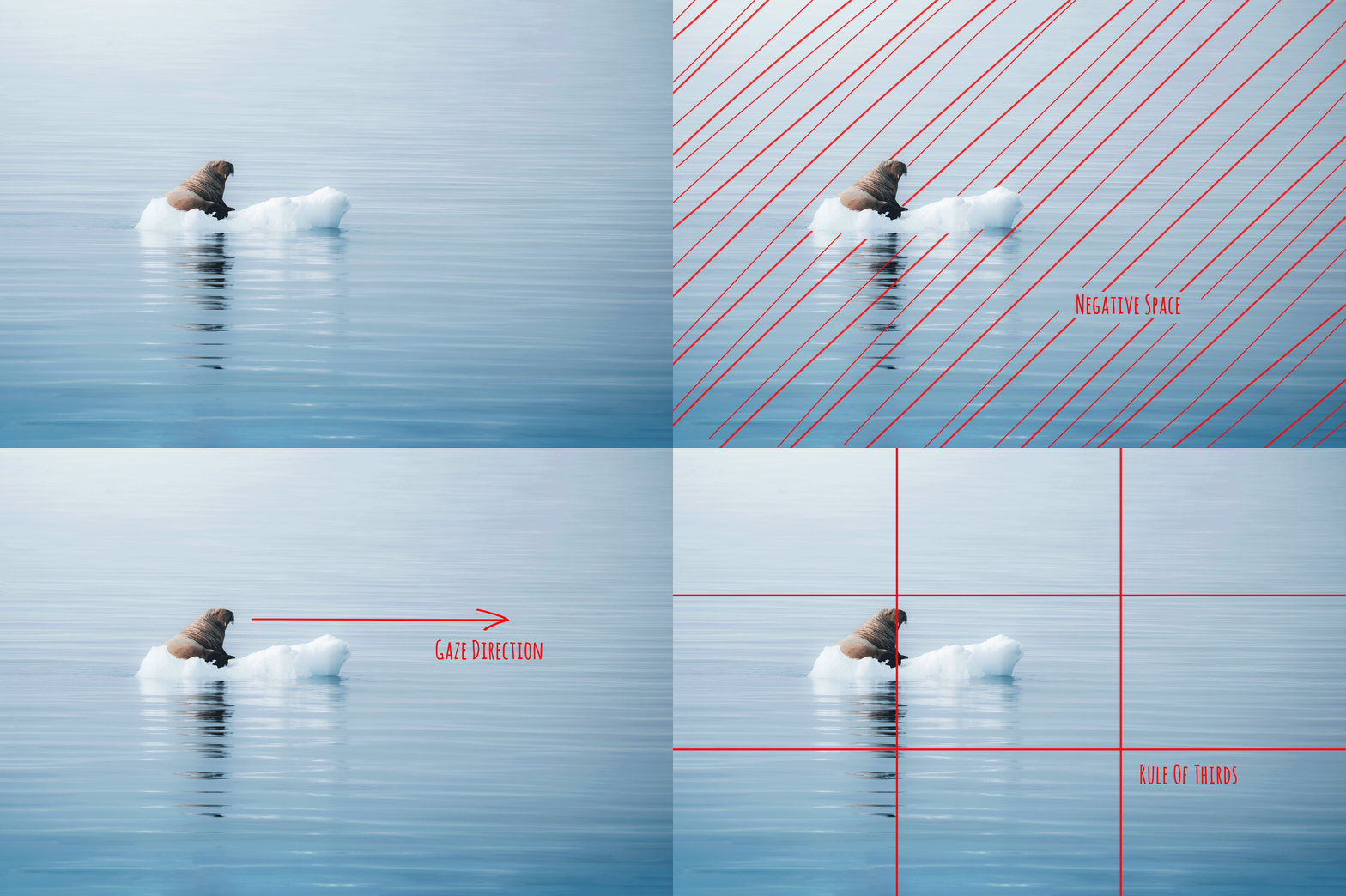
Conversely, placing your subject close to the edge of the frame in the direction they are moving or looking, while leaving empty space behind, can create a sense of unease or confinement. This technique, known as 'short-siding', is commonly used by cinematographers in dramas, thrillers, and horror films to create tension. When applied intentionally (see Tip #1 again!), it can be a powerful storytelling tool, but it otherwise risks conveying the wrong message and can weaken your composition.
4. Use leading lines
One of the key differences between a professional photographer and an amateur is the ability to guide the viewer’s eye within the frame. This can be achieved using various techniques, including
contrast (both in colour and luminance) - see our post processing guides for colour grading and masking
depth and layers (see Tip #5)
negative space (see Tip #3) and
other compositional methods.
Leading lines are a particularly effective and foolproof way to direct attention towards a specific area of the frame: allegedly, your subject.
What exactly are leading lines?
They are any linear elements within the landscape that naturally draw the viewer’s eye toward your subject. These can take many forms: a winding river, a path or trail, a shoreline, rock formations, cracks in the ground or ice, or the contours of a mountain. If you're lucky, you might find multiple leading lines within the same frame, converging towards your subject from different directions, further enhancing the composition. While this might seem complex at first, it often comes down to simply adjusting your position by a few centimetres to the left or right to achieve the perfect alignment.
5. Add depth
How many times have you seen a beautiful scene, grabbed your camera to capture it, and then looked back at the photo and realised it looks 'flat'? The issue is that while we perceive the world in three dimensions, photographs are a two-dimensional representation of that world, meaning that they inherently lack depth. However, there are ways to trick the brain into perceiving depth in a flat image.
How to add depth of field to your images
Layering is one of the most effective techniques:
ensuring that your composition includes a distinct foreground, midground – which is where our subject usually is – and background elements. This links back to Tip #2, as lowering your camera close to the ground while pointing it towards the horizon often introduces foreground elements, such as rocks, blades of grass, or ice formations, along with a distant background, like mountains or the open sky.
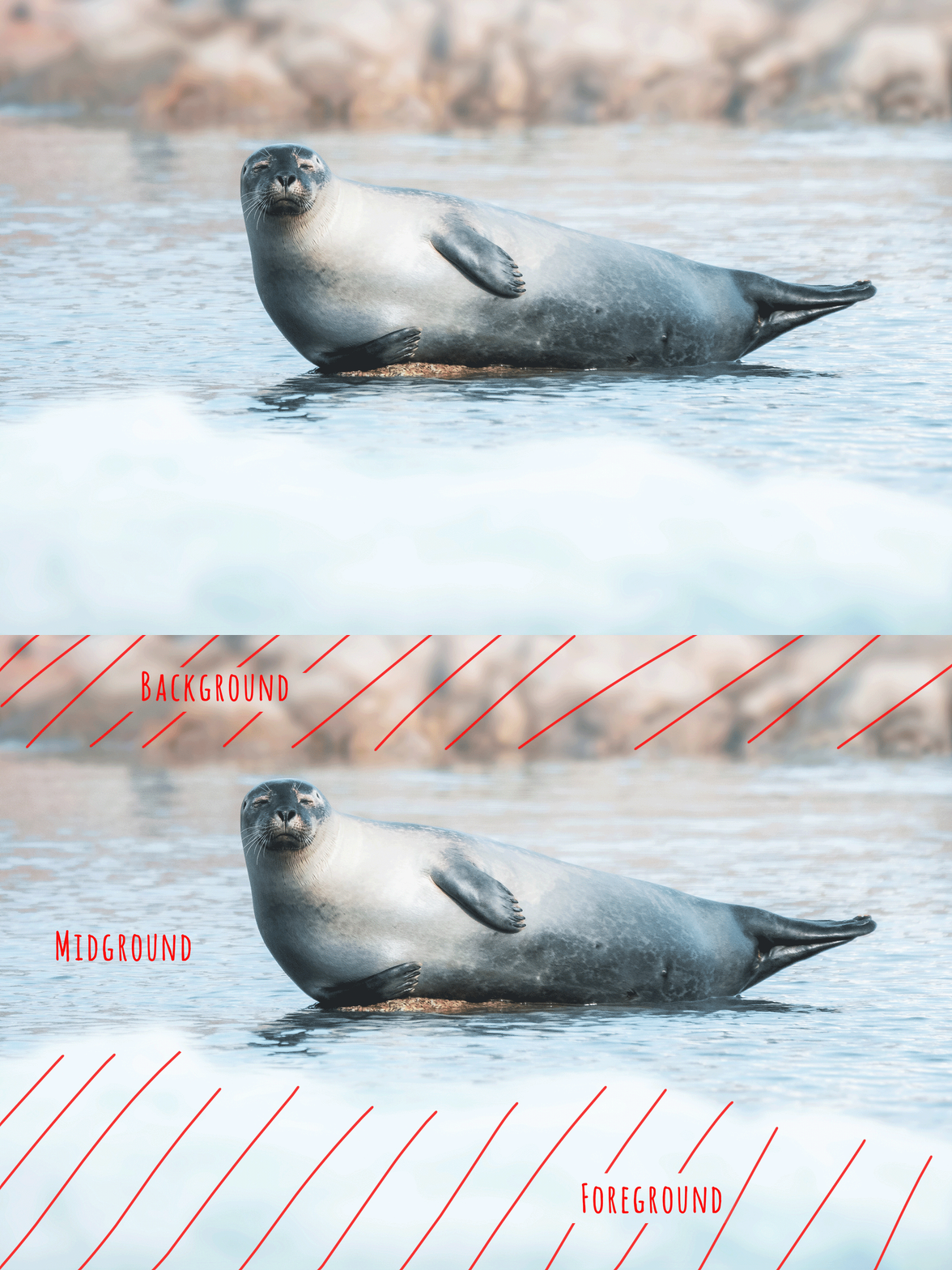
Layering can be combined with a narrow depth of field:
Using a wide aperture can blur foreground and background elements while keeping the subject sharp, creating the illusion of distance.
Incorporating leading lines (see Tip #4),
Where natural elements guide the viewer’s eye from the foreground deep into the scene, further reinforces the perception of depth.
6. Know your subjects and their environment
Before travelling to a new location, taking the time to research and learn about the local wildlife and their habitat is essential. The more you understand your subject, the better your chances of capturing stunning shots.
For instance, knowing how a particular animal behaves allows you to anticipate its movements and compose your shot more deliberately. Being aware of where it might hide makes spotting it much easier. Understanding safe distances and recognising signs of distress in a specific species ensures both your safety and that of the wildlife. If you don’t know what a species eats, how it hunts, or whether it migrates at certain times, capturing a great shot becomes mostly a matter of luck.
Check out our wildlife guides for our favourite polar destinations:
7. Respect your subject
If I had to choose just one point for you to remember from this entire list, it would be this one. Wildlife photography is a fantastic way to spend time in nature, connect with it, and deepen our understanding of the natural world. However, while we get to return home (or to the ship) at the end of the day, take a warm shower, enjoy a good meal, and perhaps sip a well-earned drink, wildlife faces a constant struggle for survival, especially in harsh environments such as the polar regions. Finding food, staying alert to predators, and conserving energy for essential tasks can mean the difference between life and death.
For this reason, no photograph is worth causing distress to an animal or forcing it out of its natural behaviour. In my experience, the most magical encounters happen when wildlife is at ease and we are not imposing our presence on it. To achieve this, we must arm ourselves with patience and the knowledge to recognise when an animal is comfortable with our presence, or when it is signalling that we need to back off.
8. Shoot RAW
RAW is a file format that contains uncompressed and unprocessed image data. In contrast, JPG files are compressed and processed by the camera's software, which makes decisions on your behalf about which information to keep and which to discard. As a result, shooting in JPG leaves you with limited options for correcting your image once it’s captured.
Shooting RAW is especially critical in environments with extreme contrast, like photographing animals in snow, where retaining highlight and shadow detail can make or break the image.
Imagine photographing a backlit subject, with the sun just outside the frame. If you shoot in JPG and underexpose to preserve details in the sky, the darker shadows are likely to turn out completely black, with no information. On the other hand, if you increase the exposure to try and preserve some detail in the shadows, the sky will end up being completely white. In a scene with significant contrast, both shadows and highlights might 'clip' (lose information) when shooting in JPG.
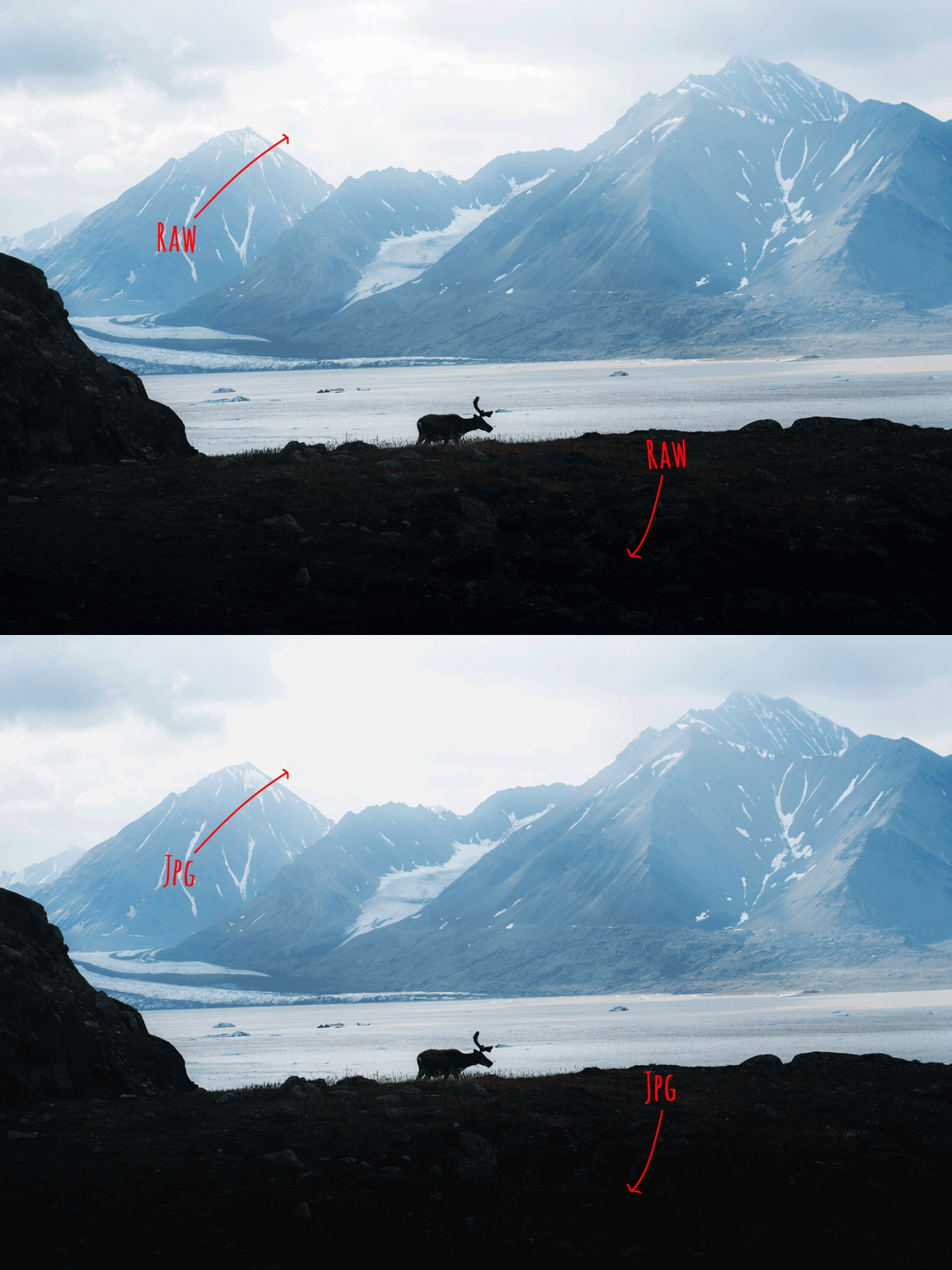
However, if you shoot in RAW, both the dark and light areas retain much more information, allowing you to recover details during post-processing with software such as Lightroom. While your goal should always be to get the best possible exposure in-camera, natural environments and fast-moving wildlife can make that challenging. The flexibility of a RAW file can save shots that might otherwise be discarded if shot in JPG. Additionally, RAW files retain a higher colour depth (more colours), making it possible to correct the white balance in post-production, as well as adjusting colours to achieve a specific look.
9. Edit your RAWs
You have set your camera to shoot RAW, great choice! As mentioned in the previous point, RAW files provide incredible flexibility in post-production. This means you should absolutely take advantage of the extra information they contain by doing some post-processing, using a RAW editing software (such as Lightroom or Capture One) to bring your photos to life.
However, post-production can be time-consuming, so it’s essential to approach it systematically. Don’t even think about editing all your photos – instead, make a selection of your best shots and focus on those. Some photographers prefer light edits, consisting of minor adjustments like white balance, exposure, and a touch of contrast. Personally, I believe that developing a personal editing style is just as important as taking a great shot in-camera. In today’s photography world, finding your own editing voice can make your images stand out and support your unique visual storytelling.
When composing a photograph through the viewfinder, it’s incredibly helpful to pre-visualise how the scene will look with your editing style applied. This exercise takes practice but, in the long term, it will help you become more, you guessed it, intentional!
10. Back up, Back up, Back up!
Imagine making it all the way to the Arctic, spending a week on a photo expedition, and capturing breathtaking shots of wildlife and landscapes. You return home, buzzing with excitement to relive your adventures and share your photos with family and friends, only to discover that your SD card has corrupted and you’ve lost everything. Calling this a bummer would be a wild understatement, and, unfortunately, I know more than one person who has faced this nightmare.
For the love of the gods, never go on a photo trip without a laptop and a few hard drives!
Make it a habit to back up your photos every evening once you’re back in your cabin, winding down before bed.
Copy all your images from the day onto two different hard drives (or onto your laptop and an external hard drive).
Having two copies makes it highly unlikely that you’ll ever lose a photo, giving you peace of mind.
11. Know your gear inside out
These days, cameras have become highly sophisticated pieces of technology, with extensive menus and numerous customisable buttons. To capture great shots, you need to focus on the scene in front of you, not on figuring out which button to press. This means you must know your gear as well as you know your own pockets. Arriving at your destination with a brand new camera that you’ve never used before will only lead to frustration, so always make sure you practise with your equipment for at least a few days before your trip.
I also recommend customising the available buttons to suit your shooting style and preferences. This way, you’ll be ready to make the most of your camera when the perfect moment arises.
One often overlooked aspect of shooting in the polar regions is how clumsy and awkward it can be to operate your camera while wearing winter clothing. You’ll be bundled up in multiple layers that restrict your movement, and your gloves (or cold hands if you go without) will make pressing small buttons a real challenge. To avoid fumbling with your gear at the crucial moment, make sure your setup is glove-compatible and spend plenty of time practising before you head out.
12. Keep it simple
After many years of shooting in challenging environments, I have come to appreciate the importance of using a stripped-back kit. Imagine standing in front of a glacier, cruising on a zodiac in -5°C (or colder), with small waves splashing salt spray onto the pontoon. In such conditions, the last thing you want is to be exposing your camera sensor by swapping lenses, or struggling to unscrew a tiny filter with bulky gloves.
To avoid these issues, I’ve settled on a flexible and efficient setup for photo expeditions:
One camera body fitted with a telezoom lens (200-600mm)
One camera body fitted with a wider lens (24-105mm)
A few spare batteries and SD cards
An action camera for underwater shots or unusual angles
A 15mm f/2.0 lens + tripod (only for night or northern lights photography)
A sturdy, waterproof rear-loading backpack that comfortably fits all of the above

This kit is extremely versatile, allowing for minimal lens swapping while being light and compact enough to carry on zodiacs, hikes, and flights. Of course, every photographer has different goals, preferences, and gear, so this setup may not work for everyone. However, I believe it serves as a useful guideline for building a practical expedition kit.
13. Keep your batteries warm (and at hand)
Cold weather and batteries don’t mix well, so it’s essential to have a few spares in your kit. When out shooting, whether on the outer deck of a ship, on a zodiac, or during a hike, keep your spare batteries in the inside pocket of your jacket. This will help keep them warm and prevent them from draining quickly, ensuring they’re ready to go when you need them.
However, having spare batteries is pointless if you can’t access them easily, so make sure they’re not buried under four layers of clothing! Before your expedition, double-check that your batteries are in good condition and not nearing the end of their lifespan. If you’re unsure, it’s always better to pack an extra one, just in case.
14. Use the right (auto) focus settings
Shooting with continuous autofocus (AF) is a no-brainer these days. Modern cameras have reached incredible levels of precision and speed, making it significantly easier to capture tack-sharp photos. However, the abundance of autofocus options can be overwhelming, and selecting the right setting for each situation requires some understanding, and a bit of trial and error. Since every brand differs slightly in how they implement autofocus, I won’t go into specifics for each system. Instead, here are the essential points to keep in mind:
Learn about your camera’s autofocus options: familiarise yourself with the different modes and focus zones available.
Practise in a controlled environment: test out various settings to see which ones suit your shooting style best.
Take advantage of eye recognition modes: if your camera offers eye tracking (often with separate modes for humans, animals, and birds), make sure to use it.
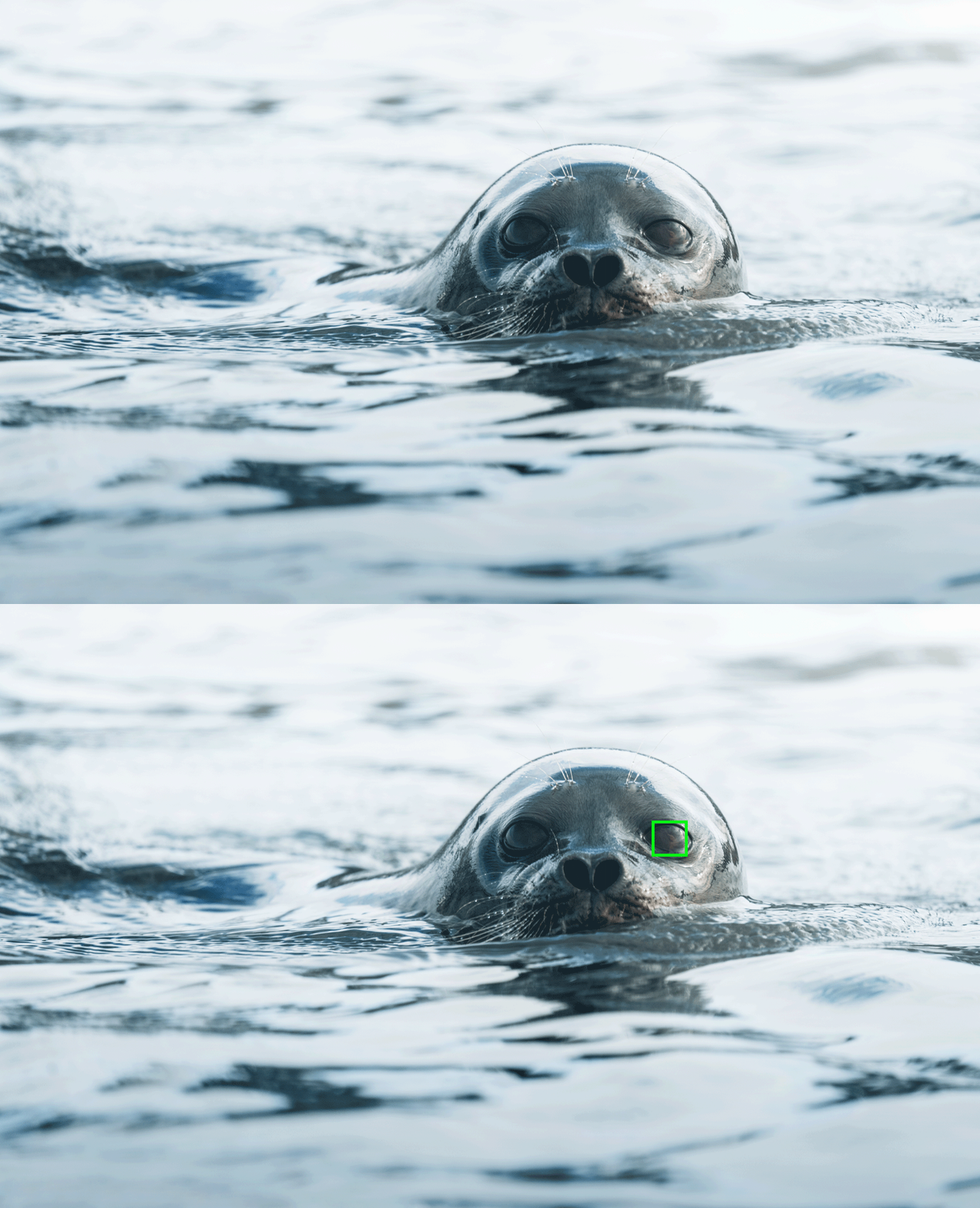
Set up a custom button for quick switching: configure a button to rotate between different autofocus modes without taking your eye off the subject. This will save valuable time and help you adapt to changing conditions on the fly.
15. Use back-button focus
While still on the topic of autofocus, this tip deserves its own mention, as I find it to be one of the main reasons why people miss focus on their subjects. By default, most cameras acquire focus by half-pressing the shutter button. This works fine for controlled environments, but it can be problematic when shooting in complex conditions or with fast-moving subjects. Luckily, it’s possible to assign a separate button to control focus, typically on the back of the camera where your thumb naturally rests, and disable the half-press focus on the shutter.
But why would you want to do that? Imagine this scenario: you’re at Alkefjellet, a bird cliff in Svalbard. Your eyes are set on your subject, a beautiful guillemot perched on a rock ledge. You carefully frame your shot, half-press the shutter to focus on the bird’s face, and then wait for the perfect moment: when it stretches its wings before taking off. Just as that moment arrives and you press the shutter fully, the focus suddenly shifts from the bird’s face to its wing, and there goes your shot.
By using a separate button to acquire focus, you can press it once to lock focus and then release it. Now, no matter how many shots you take, the focus remains fixed until you press the back-button again. This technique provides far more control and greatly reduces the risk of losing focus at critical moments.
16. (Really) Understand the Exposure Triangle
Most photographers know the basics of the exposure triangle: shutter speed, aperture, and ISO. But when it comes to applying the right combination in real-world situations – especially in the ever-changing conditions of the polar regions – many struggle to get it right.
In polar wildlife photography, understanding how to balance these three elements is critical, not only for capturing properly exposed images but for ensuring your subject is sharp and well-composed in its environment. This connects closely to Tip #6 – knowing your subject’s behaviour will directly influence the settings you choose.
Scenario 1: Freezing fast action
Imagine spotting some Arctic terns flying by. For birds in flight, you’ll need a fast shutter speed, typically 1/2500 or faster, especially if using a telephoto lens. As for aperture, consider how much light is available and how shallow you want your depth of field to be. To isolate the bird from the background, shoot as wide as your lens allows.

Scenario 2: Slow and steady subjects
Now imagine photographing a polar bear slowly roaming on the ice. You can afford a slower shutter speed, about double your focal length (e.g., 1/800 for a 400mm lens). If shooting from a moving platform like a zodiac, increase it slightly to around 1/1000. To include more background detail, choose a narrower aperture like f/8.0, as long as light conditions allow.

These scenarios show how different settings suit different situations. While fast-action settings might work for slower subjects (albeit with a shallower depth of field), the reverse doesn’t hold true: a slow shutter speed will blur a flying bird. When this happens, people often blame their camera for missing focus, but it’s usually down to user error.
What about ISO?
For expedition-style wildlife photography, especially on an Arctic or Antarctic photo expedition, I recommend using auto ISO. Many species appear and disappear quickly, and having to manage one less setting can save valuable time. With auto ISO, you can set a maximum limit, so that your camera doesn’t use an extremely high ISO value which would result in a very noisy (unusable) image.
Mastering the exposure triangle in these ways will help you confidently capture everything from the blur of a snowstorm to a tack-sharp puffin mid-flight – an essential skill for any Arctic wildlife photographer.
17. Play safe AND experiment
I’ve seen this time and again on our expeditions: let’s say we spend ten minutes by a walrus haul-out. During that time, many photographers take the same 'safe' shot over and over, ending up with hundreds of nearly identical images. While it’s good to capture a few consistent shots from the same angle and focal length, don’t be afraid to experiment.
Whenever possible, change your angle, try different depths of field, or switch up your perspective: go very close (with a long lens, not physically!) or pull back and shoot wide. In other words, push yourself out of your comfort zone and try something different but, of course, always with intention!
Ready to take your polar wildlife photography to the next level?
There’s only so much you can learn behind a screen – sometimes the best way to grow is to step into the wild. If you're inspired to put these tips into practice and capture breathtaking images of polar wildlife, join one of our expert-led polar photo tours.
From photographing polar bears and Arctic foxes in Svalbard and East Greenland, to witnessing king penguins and elephant seals in South Georgia, or capturing the icy drama of Antarctica, our small-ship expeditions give you unmatched access to the polar regions. With hands-on guidance, low-impact travel, and time to truly immerse yourself, these tours are built for photographers who want more than snapshots – they want stories.
Discover our upcoming Arctic and Antarctic photography expeditions.

Svalbard Spring Photo Tour
78°13’N, 15°38’E
Landscape photographers adore Svalbard in the early season, when puzzle-piece sea ice and snow-enrobed shorelines glow under pastel sunrises and sunsets.
- 12 guests
- 8 — 10 days

Svalbard Spring Photo Tour with Randy Hanna
78°22’N, 15°65’E
Head north with world-renowned photographer and tutor Randy Hanna, capturing the frozen Arctic landscape of Svalbard in the spring.
- 12 guests
- 10 days
Svalbard Summer Photo Tour
78°22’N, 15°65’E
Venture north to photograph Svalbard as summer sweeps across the archipelago and the Arctic bursts into life.
- guests
- 10 days

Svalbard Summer Photo Tour with Paul Goldstein
78°22’N, 15°65’E
Paul Goldstein is a nature-photography heavyweight, a go-hard, all-hours maestro – and the perfect guide to take your wildlife photography up a gear (or 10) in Svalbard.
- 12 guests
- 10 days

Svalbard Summer Photo Tour with Randy Hanna
78°22’N, 15°65’E
Explore summertime Svalbard with nature photographer Randy Hanna, capturing intimate shots of wildlife in their stunning Arctic habitat.
- 12 guests
- 10 days
Svalbard Autumn Photo Tour
78°22’N, 15°65’E
Wildlife and landscape photographers rush to catch Svalbard at this unique part of the year, when languorous sunrises and sunsets paint the scenery in autumnal colours and far-flung destinations like Austfonna are still within reach.
- 12 guests
- 8 — 12 days

Svalbard Autumn Photo Tour with Virgil Reglioni
78°22’N, 15°65’E
Set off on a late-season adventure, when sunsets and sunrises cast spellbinding colours the archipelago, and capture the meltwater waterfalls of the Austfonna ice cap with top polar photographer Virgil Reglioni.
- 12 guests
- 12 days

Scoresbysund Northern Lights Photo Tour
70°50’N, 25°00’W
Capture the heavens bursting with light above the monumental icebergs and high-drama landscape of Scoresbysund.
- 12 guests
- 8 — 9 days

Scoresbysund Northern Lights Photo Tour with Virgil Reglioni
70°50’N, 25°00’W
With 0% light pollution and insane iceberg sculptures, paired with the world’s finest aurora borealis photographer, you’re in for a treat.
- 12 guests
- 9 days

Scoresbysund Northern Lights Photo Tour with Randy Hanna
70°50’N, 25°00’W
Photograph the northern lights illuminating the skies above Scoresbysund with nature photography legend Randy Hanna.
- 12 guests
- 9 days


Phone
USA
USA+CAN Toll Free
AUS Toll Free
Brochure
We use cookies to provide a better online experience. Please let us know if you agree to them. You can read our Privacy Policy for more information.

Join the Secret Atlas newsletter
Join the Secret Atlas newsletter
Thank you for signing up!
Welcome to Expedition Micro Cruising. Discover the difference.
We will be exclusively sharing with you our best-kept secrets. You'll receive first-hand expert advice and inspiring stories from our team of explorers, plus our latest news and offers.

Plan Your Journey
Speak to an Expedition Specialist
Book a Video Call
Speak face-to-face with an expedition specialist. Ask questions, explore ideas, and start shaping a journey built around you.
Book a Phone Call
Talk with an expedition specialist. Get clear, honest guidance to help you plan your next Expedition Micro Cruise.
Download your brochure
Just enter a few details to receive your brochure.