South Georgia cruises
Grytviken
54°16’S, 36°30’W


Set out on a South Georgia cruise of only 44 guests, and meet the famous wildlife of one of the most ecologically rich destinations on Earth.
Why you should join a South Georgia cruise
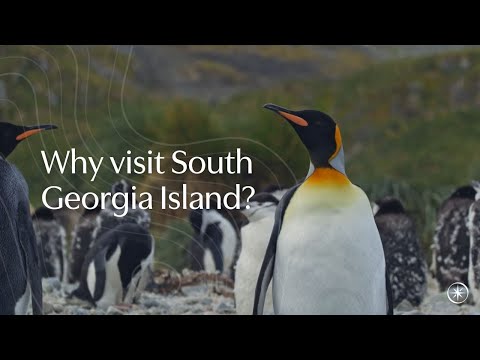
Explore this preciously remote land in the South Atlantic, home to a stunning array of wildlife. King penguin colonies, 100,000-strong, stretch out along the coastline. Ginormous elephant seals bask on the beaches. Seabirds, such as the mighty albatross, whirl overhead. Immerse yourself in nature on a South Georgia small ship cruise.
An Expedition Micro Cruise to South Georgia promises animal encounters like nowhere else on Earth. But there’s even more to the island at the gates of Antarctica than its wildlife, with a fascinating human history interwoven with the history of exploration.

/maps-with-lines/south-georgia-map-with-line-expedition-destinations-secret-atlas.png)
Wildlife
The king penguin colonies are top of everyone’s wildlife-spotting lists on South Georgia expeditions. Seeing hundreds of thousands of these majestic, characterful creatures in their natural habitat lives long in the memory.
The feeling of being in your very own nature documentary extends beyond the resident penguin population. Elephant seals, with their distinctive trunk-like noses, are fascinating to observe. The less imposing Antarctic fur seals are gloriously abundant here, with as many as five million of them on South Georgia. Happy counting!
Overhead, spot wandering albatrosses, the largest flying bird in the world; at sea, keep your eyes peeled for humpback, southern fin, and blue whales.
History
Though it was first discovered by Anthony de la Roché in 1675, it wasn’t until a hundred years later that Captain James Cook made the first landing on the island, claiming it for the British and naming the remote, harsh land ‘Isle of Georgia’ after King George III.
From the 1800s to the mid-20th century, the island was a hub of the whaling industry. The most prominent whaling station was at Grytviken, the remnants of which today comprise the largest South Georgia settlement. Disastrously reduced by overexploitation, whale populations in the waters surrounding South Georgia are slowly beginning to recover.
The island played an integral role in the history of Antarctic exploration. Shackleton’s third Antarctic expedition departed from Grytviken in late 1914. After his ship, Endurance, sank in the Weddell Sea, Shackleton and five others sailed a small lifeboat back to South Georgia, crossing the island on foot before raising the alarm in the whaling station Stromness.
On his next expedition to Antarctica, Shackleton suffered a sudden heart attack while moored at South Georgia, and the island became his final resting place. His grave is at Grytviken.
Aside from a brief period of Argentine occupation during the Falklands War, South Georgia has been under British rule since 1908. It is home to Britain’s tallest mountain, Mount Paget, which, at 2,934m, stands more than twice as tall as Ben Nevis, the tallest mountain on mainland UK. It is an imposing feature of South Georgia’s landscape.
Places of interest
Geological sites
Mountainous, glaciated South Georgia provides countless points of interest for geologists.
Shackleton grave
The great explorer died following a heart attack here in 1922. His grave stands in the whalers’ graveyard in Grytviken.
The former whaling station is now the largest settlement on the island, home to the South Georgia Museum, the Whalers Church, and Shackleton’s grave, and noted for its repurposed industrial architecture.
Just 1km from Grytviken is South Georgia’s other primary settlement, primarily a research station run by the British Antarctic Survey.
Currently closed to landings but can be seen on a Zodiac cruise.
Another former whaling station, Stromness is where Shackleton’s crew famously completed their arduous journey across the island. The dramatic landscape provides a powerful setting to consider one of history’s greatest stories of survival and perseverance.
An iconic sight on any South Georgia expedition, the bay is home to one of the largest king penguin colonies on the island, with over 100,000 penguins set against a backdrop of snowy mountains.
Another penguin hotspot, Salisbury Plain is renowned for its massive king penguin colony, but elephant seals and a whole host of seabirds compete for your attention, too.
Currently closed for repairs to the boardwalk.
A protected breeding site for the wandering albatross, the largest flying bird on Earth. Viewing platforms allow you to admire these impressive creatures as they court and nest without disturbing them.
At the foot of the Salvesen Mountains, Gold Harbour draws together so much of what makes South Georgia special, with penguins and elephant seals lining the beach, lush tussock grass, and the Bertrab glacier dramatically jutting out from the cliffs above.
The landing site of Shackleton’s James Caird lifeboat, as the six men made it back to South Georgia following the sinking of the Endurance. As three of the men traversed the island on foot, those unable to walk remained on the bay’s Peggotty Bluff, sheltering under the upturned boat.
South Georgia cruises
Micro Cruises

South Georgia Spring Micro Cruise
54°16’S, 36°30’W
Capture South Georgia’s spring awakening without crowds or rigid schedules. Witness king penguins courting, elephant seals battling, and abundant wildlife with just 44 guests.
- guests
- 15 days

South Georgia Autumn Micro Cruise
54°16’S, 36°30’W
Explore South Georgia’s snow-dusted peaks, golden autumn light, roaring elephant seals, and vibrant penguin colonies on our longest-ever 15-day expedition with just 44 guests.
- guests
- 15 days

Falklands, South Georgia and Antarctica Micro Cruise
Combine Falklands, South Georgia and Antarctica on a 78-guest cruise expedition in Spring. Follow in Shackleton’s footsteps, witness penguin chicks and whales, and enjoy uncrowded, pristine landscapes.
- 78 guests
- 21 days
The Expedition Micro Cruise concept


When to take your South Georgia cruise
The South Georgia cruise season starts in November and ends in March. There are no visitors during the winter months due to the harsh conditions.
Each month of the visitor season offers something different.
November is spring in South Georgia, and king penguins begin to lay their eggs ashore. Humpback whales begin to arrive in the waters; seabirds return and begin nesting. Elephant seals come ashore to breed, with bulls fighting it out to see who will reign as 'beachmaster' and head of their herd.
December is the first month of summer when the days are longest and warmest. The beaches are packed with fur seals and most birds have laid their eggs. In January, the final king penguins are laying their eggs and fin whales return.
In February, when the days are longest the first fluffy king penguin chicks start to hatch, albatrosses are incubating their young, and elephant seals moult on the beaches.
As autumn begins in March, adult fur seals return to the sea, leaving their pups ashore, Albatross chicks hatch on Prion Island, and whales can regularly be seen in the waters around South Georgia.

Private charters
Design your own private expedition micro cruise with Secret Atlas
Share the journey with those who matter most.

Explorer's Handbook
Everything you need to know to help you plan your South Georgia expedition, from destination guides to weather insights and what to pack…

Best Time to Visit South Georgia Island
Best Time to Visit South Georgia Island

How to Get to South Georgia
How to Get to South Georgia

25 Interesting South Georgia Facts
25 Interesting South Georgia Facts

What to Pack for Antarctica and South Georgia
What to Pack for Antarctica and South Georgia

Gold Harbour, South Georgia | The Ultimate Exploration Guide
Gold Harbour, South Georgia | The Ultimate Exploration Guide
South Georgia cruise FAQs
Where do your cruises to South Georgia depart from?
Our South Georgia island cruises typically depart from Stanley in the Falkland Islands.
The Falkland Islands have good air-links to South America. LATAM airlines fly from Santiago in Chile via Punta Arenas to the Falkland Islands once per week.
It is also possible to fly to the Falkland Islands from the UK via an MOD flight, although this is a more expensive and less reliable option.
It is also possible to see the Falklands and South Georgia together on a South Georgia and Falklands cruise.
For more information please see our micro guide below:
How does an Expedition Micro Cruise in South Georgia compare to other cruises?
A number of companies offer expedition cruises to South Georgia. Usually, they include South Georgia with Antarctica and in their itinerary, they only allow 2–3 days in South Georgia, which is not enough time to even begin to appreciate the island. Due to unpredictable weather, a day can often be removed from an itinerary.
The average number of passengers on these large ships is over 250. In our opinion, that is too many people to be landing at sensitive places in South Georgia. Quite often guests are split into groups as not all guests can visit the shore at the same time due to restrictions at the landing sites.
Our small ship allows all guests to be ashore at the same time and have unrestricted access to all the landing sites in South Georgia.
Many companies advertise small ship cruises to South Georgia, but their definition of a ‘small ship’ varies and can range from 500 guests down to 50 guests. The difference between travelling with 250 guests and 48 guests is huge. Our Expedition Micro Cruises to South Georgia are the way they should be: intimate, low impact, and offering our guests the richest experience.
What places will I visit on a cruise to South Georgia?
A big part of the adventure of an expedition cruise is to spend time exploring the wilderness, which means every trip is different.
Our route is decided on the day of boarding and is chosen by the expedition leader and the captain, in line with the prevailing weather and ice conditions. Their aim is to ensure that you see the very best that South Georgia has to offer.
On a typical South Georgia cruise expedition, you can expect daily shore landings to visit sites of historical and natural interest and to undertake short wilderness hikes.
We will also visit known wildlife sites including beaches where penguins breed and nest, and areas where whales are frequently sighted.
Will it be cold on my cruise to South Georgia?
The weather in South Georgia is highly changeable and the island is known for its strong winds. The climate is cold due to its proximity to Antarctica.
During the summer months, the temperature usually varies between 0°C and 5.5°C. With the wind this can feel much colder. Without the wind and when the sun is out, it can feel much warmer.
We will supply you with a comprehensive packing list at the time of booking that outlines the types of clothing you will need to keep you comfortable on your South Georgia cruise.
Is an Expedition Micro Cruise suitable for me?
Our cruises to South Georgia island are suitable for the vast majority of people and we aim to make them as accessible as possible.
We ask that our guests have a good level of mobility, as it is a requirement that you can safely step down from the vessel into the landing craft and then exit the landing craft onto land.
Due to the remote areas we visit on each cruise to South Georgia island – and the distance from medical assistance – we advise that you have a reasonable level of fitness and are in good health.
During shore landings, we have at least two guides, which enables us to split the group if we have some keen hikers and some other guests who want to keep things leisurely.
Who joins your South Georgia cruises?
We don’t have any age restrictions on our expeditions and we pride ourselves on having diverse guests from all over the world, united by a passion for exploring.
In the past we have had young professionals eager to explore, through to middle-aged solo travellers looking for their next adventure and retirees looking to see South Georgia in a more in-depth way. Our expeditions are friendly and inclusive for all our guests.
Can I join your cruise to South Georgia as a solo traveller?
Yes, you can. Every year we welcome solo travellers on board, where you will find a warm and welcoming atmosphere.
We offer accommodation options for single cabins or sharing a cabin with travellers of the same gender.
How do you ensure your South Georgia cruises don’t have a negative effect on the environment?
That’s a great question and one we want to answer honestly.
Our South Georgia cruise vessels don’t burn heavy fuels, which are particularly detrimental to the environment, and run on standard marine diesel.
During our cruises, we follow very strict guidelines as set out by IAATO (International Association of Antarctica Tour Operators) to ensure minimal impact on the wildlife and places we visit. This includes following strict rules about not disturbing wildlife in its natural habitat.
We employ highly experienced expedition leaders to run our expeditions in accordance with the rules and safety code laid out by IAATO.
We are proud members of 1% for the Planet, pledging to donate at least 1% of our annual revenue to charitable causes that benefit our world.
In addition, we support the Yachts for Science initiative, regularly taking scientists and researchers on our expedition vessels, giving them the transport and space they need to complete their important work.
We believe that working with local communities is a big part of responsible tourism and hire locally wherever possible.
For more information on our commitment to the planet and what we’re doing to make our expeditions as responsible as possible, head to:



Phone
USA
USA+CAN Toll Free
AUS Toll Free