#16
Inside ‘Svalbard: Symphony of the Seasons’, A Short Film by Ross Dixon and Secret Atlas

When is the right time to visit Svalbard?
That’s the question that started off our collaboration with video director and wildlife photographer Ross Dixon.
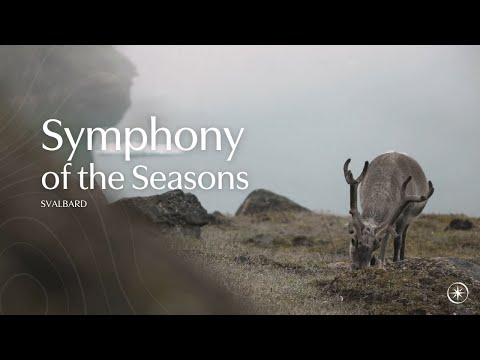
The resulting film, Svalbard: Symphony of the Seasons, takes a unique sensory approach to the archipelago in the High North.
The short sequence is full of arresting shots – a daring Arctic fox hunting on the sheer face of Alkefjellet bird cliff, the monochromatic play of ice and sea, belugas and humpbacks patrolling the waters – all captured across two Expedition Micro Cruises to Svalbard with Secret Atlas.
But sound is the driving sense here. It guides the action and narrates the story of seasonal change that plays out across Svalbard each year.
Svalbard truths and misconceptions
With the film, Ross was hoping to explode a few myths about Svalbard and the wider Arctic. “People have this image of Svalbard as dark and snowy all the time. And that’s how it is in the spring,” he explains, “but people don’t realise how green it gets in the summer.”
Of course, many people are drawn to the quintessential image of a frozen Svalbard: the crystalline fjord ice, untouched snow, and enveloping quiet that mark springtime on the archipelago. “But if you’re looking for wildlife, summer is better,” says Ross, “It’s when the migratory animals come back and life just kind of explodes there.”


The archipelago’s birdlife served as the first inspiration for the film and the approach Ross took. “The birds were the inspiring point, initially,” he says. “Birds have the largest number of migratory species out of pretty much everything that goes there, apart from large marine life.”
For Ross, birds symbolise the change Svalbard experiences across the year. “If you go in winter or spring, there’s nothing there. But if you go in summer and you go up into the northeast, you’ve got this cacophony of sound from all the nesting birds. That’s where the inspiration for the film and its name came from.”

Svalbard Spring Micro Cruise
78°22’N, 15°65’E
A frozen fairytale of iceberg-strewn fjords, snowy peaks, and puzzle-piece sea ice – as animals take their first steps following winter.
- 12 guests
- 8 — 10 days

Svalbard Summer Micro Cruise
78°22’N, 15°65’E
Set sail in summer, when Svalbard blooms with life, the best time to spot wildlife in Europe’s last great wilderness.
- 12 guests
- 10 days
The changing sounds of Svalbard
The drip-drop of ice melting. The rumble-crash of glaciers calving. Whale blows. Walrus grunts. Bear growls.
It’s not just the bird calls of Alkefjellet that tell the story of Svalbard’s seasons through sound. The sounds of Svalbard we hear in the film all speak of change, motion, and migration as the cycle of life spins into a new season, a new year.
The temperature rising. The ice shifting. Animals breeding, feeding, and protecting their young. It’s all here, in sound.
For Ross, sound was the best entry point to the story of change he was hoping to tell, as it allowed him to zoom in on processes taking place beneath the surface.
He explains: “In the spring and in the winter, Svalbard is very much about ice and experiencing it; understanding it and the beauty of it. How it’s formed, why it’s there. And the sound of it, even when it’s seemingly dormant or at rest. The captain turned the engines off and we sat there in silence. You hear it. The carbon dioxide bubbles trapped within the ice.”
What does it sound like? “Rice Krispies!” Ross says. “There’s no better description for it. Snap, crackle, and pop. It’s incredible.” Listen out for it in the film.
Ross continues, “And then you have the otherworldly creaks and groans of the glaciers as they are moving. Then out of nowhere, a calving will happen.” You hear it before you see it, Ross says. “And then it’s the epitome of action. The calving. Beautiful, powerful, bittersweet. Although you know there’s a trigger, you never see it. The friction on the bottom, it’s moving so slowly, and eventually there’s a breaking point. You never see it. But you do hear it.”
In the film, shifting between the under-the-surface and the high-drama sounds of Svalbard helps dispel another common misconception about the Arctic. The idea that, in its supposed frozenness, it is somehow static, trapped in ice, unchanging, barren.
That’s just not the case, says Ross. “There’s nothing static there,” he explains, “The sounds show that most succinctly. But I mirrored it in my camerawork, too.” How so? “None of my shots are static. They all have motion in them.”

The challenges and rewards of filming in the Arctic
Ross is no stranger to shooting on location in challenging environments. Last year, he spent 185 days away from his home in North East England, filming and photographing across five continents.
But his first time in Svalbard was the first day of the expedition and the shoot. Was there anything specific to the Arctic and Svalbard that he found challenging about the filming process?
“The weather!” he says after about a millisecond’s thinking time. “Not that it was bad, necessarily, which it wasn’t. But it was hard to predict. My mantra is that the only weather forecast I trust is going outside and looking up. That was never truer than in Svalbard.”
With that lack of predictability, was it hard to plan the shoot? “I had shot in Antarctica before, so I knew what to expect in terms of polar logistics. And whenever you’re filming wildlife or natural processes, you can’t say, ‘Right, I’m going to get this shot of a polar bear,’ because you will be disappointed. So it was very much scripted around a rough structure of things I wanted to capture. I made my wishlist. A sort of structural shot list. I got there and just saw what happened… ”
The idea was never to make a slick advert or a cinematic wildlife documentary. “Anybody who watches David Attenborough documentaries knows that these guys are spending months sitting in a hide waiting for something to happen. That wasn’t an option for us. I was tagging along on an expedition and seeing what unfolded whilst we were there. Being opportunistic and taking it from there.”
And how did that work out? “I managed to tick off absolutely everything on my shot list. So I’d say it went pretty well!”
With Ross, in his words, ‘tagging along’ on two Secret Atlas expeditions, rather than a video production expedition, there was no chance of taking the kind of cinema cameras he usually films on with him to Svalbard.


“It takes three people to operate them. I typically film with two. A fully rigged camera is somewhere between 20 and 40 kilograms. Me hiking through Svalbard with two of them would be impossible.” So he slimmed down his operation. “I had two cameras… but they were both handheld. One, with my 600mm lens for premium-looking wildlife shots. And I also had a set of vintage lenses with me: a 37.5 and a 57, which are quite unusual focal lengths.”
What was the thinking there? “They are vintage Soviet lenses, and the glass in them is imperfect. You get loads of little sharp and soft spots, lots of little flecks and loads of character. They more accurately mimic the human eye.”
Both setups helped achieve the effect Ross had in mind. “I leaned into the fact I was on a real expedition and gave a ‘guest’s-eye view’ of it. The vintage lenses, particularly because it was all handheld, give an authentic sense of what you will see on a Secret Atlas expedition. It’s immersive, the camera is your eye. This is what you will see.”
And the 600mm? “That’s showing you what you can photograph on an expedition. I purposefully didn’t use camera gear above the typical level most guests are taking on these expeditions. I was resting the lens on the side of the ship, on rocks. It’s premium-looking. But it’s attainable.”

Svalbard Autumn Photo Tour
78°22’N, 15°65’E
Wildlife and landscape photographers rush to catch Svalbard at this unique part of the year, when languorous sunrises and sunsets paint the scenery in autumnal colours and far-flung destinations like Austfonna are still within reach.
- 12 guests
- 8 — 12 days

Svalbard Spring Photo Tour
78°13’N, 15°38’E
Landscape photographers adore Svalbard in the early season, when puzzle-piece sea ice and snow-enrobed shorelines glow under pastel sunrises and sunsets.
- 12 guests
- 8 — 10 days

Svalbard Spring Photo Tour Lite
78°22’N, 15°65’E
A compact adventure for landscape photographers, our shortened early-season tour gets you shooting the best of springtime Svalbard in fewer days.
- 12 guests
- 8 days

Svalbard Summer Solstice Micro Cruise
78°22’N, 15°65’E
Our longest photo tour sails when the midnight sun is at its zenith, providing 24-hour photo opportunities in the company of your pro photographer guide.
- 12 guests
- 10 — 12 days

Svalbard Summer Photo Tour
78°22’N, 15°65’E
Venture north to photograph Svalbard as summer sweeps across the archipelago and the Arctic bursts into life.
- guests
- 10 days

The Expedition Micro Cruise experience
Ross joined us for two Svalbard Expedition Micro Cruises in 2024. The first to see Svalbard reawaken following the long Arctic night in late-April/early-May. The second came in August, at the height of summer. He also joined us later in the year on one of our first Expedition Micro Cruises to Scoresbysund, East Greenland.
The Expedition Micro Cruise concept


“Each one was different,” he says. “And never bad different, always good different.” And that wasn’t just down to seasonal changes.
Ross explains, “For instance, the guides on my first trip were Sandra and Virgil (Sandra Walser, expedition leader, and Virgil Reglioni, guide and professional photographer). Sandra is this amazing historian, who brought to life all these explorer stories. And Virgil is a photography expert, specialising in aurora and Arctic landscape photography. Having their two different but complementary skillsets and knowledge stores on board was invaluable, to be honest.”
Ross was similarly grateful for the input from guides aboard his summer Svalbard expedition. “We had Bob and Fede (Robert Gilmore and Federico Beaudoin, expedition leader and guide respectively). Fede is a wildlife guy. He knows everything there is to know about Arctic and Antarctic wildlife. And Bob… I want to call him an all-rounder, but he’s the most in-depth all-rounder I’ve ever met about everything!”
So did he feel the experience changed with the guides? “More than that, it changed with the guests. It was very tailored to what guests wanted to do and what they were able to do. Whether it was hiking, cruising on the Zodiacs, learning about the history, or looking out for wildlife.”
Ultimately, the differences between the seasons play their role in sculpting the experience.
Ross recalls when his summertime expedition made it to the Alkefjellet bird cliff in northeast Svalbard, a scene he saw as crucial to the film’s narrative, functioning as a form of crescendo to the symphony. “It was amazing, but it was the most nervewracking bit for me – not just because I was getting so much guano on my lens! It was the climax of the film, and just as we got there, we saw this storm coming in. I didn’t know if we’d have time to get the shots I needed. But I spoke to the guides and the crew about how long we had, and we made it work.”

Why Secret Atlas?
There's a certain spirit that yearns to venture where few have gone, to feel the wilder side of life, and embrace the unknown.
We are guided by that spirit.
We help others discover a world much bigger than the ones they encounter day-to-day, then explore it the way it deserves to be explored – with appreciation, time, and in harmony with nature.

Ross continues, “Again, it’s all down to the flexibility of the expedition-style cruise. Whether it’s responding to guest wants or weather conditions, flexibility is the main thing. And the guides and crew were just so responsive to what I said I wanted to film, and what every other guest wanted to do. Everyone was approachable and committed, from the expedition guides to the crew.”
One memory in particular stands out for Ross. “We were on board the ship and I spotted a whale’s blow about nine miles away. It was off to the port, and I was 100% I hadn’t imagined it. I told the captain, not really knowing what his response would be.”
Ross continues, “I told him and literally that second, he turned the ship and we went in the direction of the blow for half an hour. No questions asked. When I saw it, I was sure it was a blow. But as the minutes ticked by and we didn’t see it again, I was getting nervous. I was the only one who’d seen it. I was doubting myself. Had I taken us off course for a trick of the light?”
Had he? “And then we saw the blow again and my heart was out of my throat. We spent half an hour with this beautiful humpback, going another half an hour in the ‘wrong’ direction and another half an hour back. Just because I thought I’d seen a whale. It was totally worth it.”
So will Ross be returning to the Arctic soon? “100%. I don’t know when, but personally and professionally, I very much hope so.”
And having done it as part of a 12-person experience, would he go as part of a bigger group?
Ross is emphatic. “Personally, there is no way I’d go in a group bigger than 12. With this model, after tasting it, I would never do anything else.”

Svalbard Spring Micro Cruise Lite
78°22’N, 15°65’E
Our compact early-season adventure packs in all the highlights of Svalbard in just a short space of time – with no fear of missing out.
- 12 guests
- — days

Svalbard Circumnavigation Micro Cruise
78°22’N, 15°65’E
The big one. As the sea opens up under the midnight sun, take the unique opportunity to circumnavigate Svalbard, Europe’s last great wilderness.
- 12 guests
- 12 days
Svalbard Spring Micro Cruise
78°22’N, 15°65’E
A frozen fairytale of iceberg-strewn fjords, snowy peaks, and puzzle-piece sea ice – as animals take their first steps following winter.
- 12 guests
- 8 — 10 days
Svalbard Summer Micro Cruise
78°22’N, 15°65’E
Set sail in summer, when Svalbard blooms with life, the best time to spot wildlife in Europe’s last great wilderness.
- 12 guests
- 10 days
Svalbard Autumn Photo Tour
78°22’N, 15°65’E
Wildlife and landscape photographers rush to catch Svalbard at this unique part of the year, when languorous sunrises and sunsets paint the scenery in autumnal colours and far-flung destinations like Austfonna are still within reach.
- 12 guests
- 8 — 12 days
Other relevant articles



Phone
USA
USA+CAN Toll Free
AUS Toll Free